Via Corbetta, 8, 21052 Busto Arsizio VA, Italia

Mixers for Plastic Granules and Powders: Forty Years of Historical Evolution

So, were you able to design a system that met these requirements?

“Exactly, I redesigned them and introduced them to the market through the company Cos.me.ca, where I was working at the time. We started designing these machines to also ensure easy cleaning: initially there were few materials, then the types kept increasing and therefore there was a risk of contamination of one granule with another. We designed these new mixers to ensure maximum cleanliness and prevent contamination from one product to another.

In short, there was technical evolution at that time: the mixers of that era were closed and difficult to clean, so we designed these mixers which, with their operating method, allowed (and still allow today) multiple cones and are therefore easier to clean. We are talking about machines with containers ranging from 150 liters to 2000 liters. With our design we also added the possibility of introducing material during certain phases after the mixing screw is inserted into the cone, through additional hatches.”

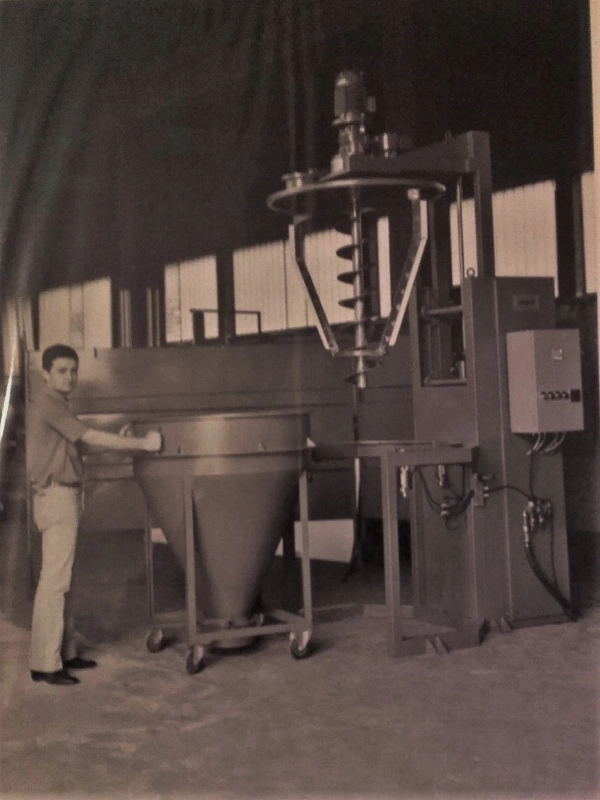
Photo: Aurelio Colombo next to one of the first mixing systems designed in 1979
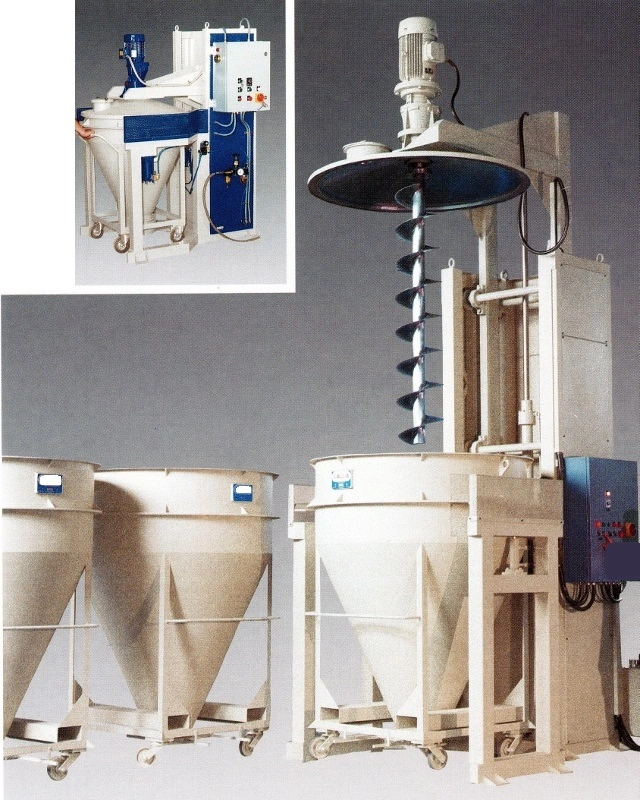
Photo of mixing systems from 1979
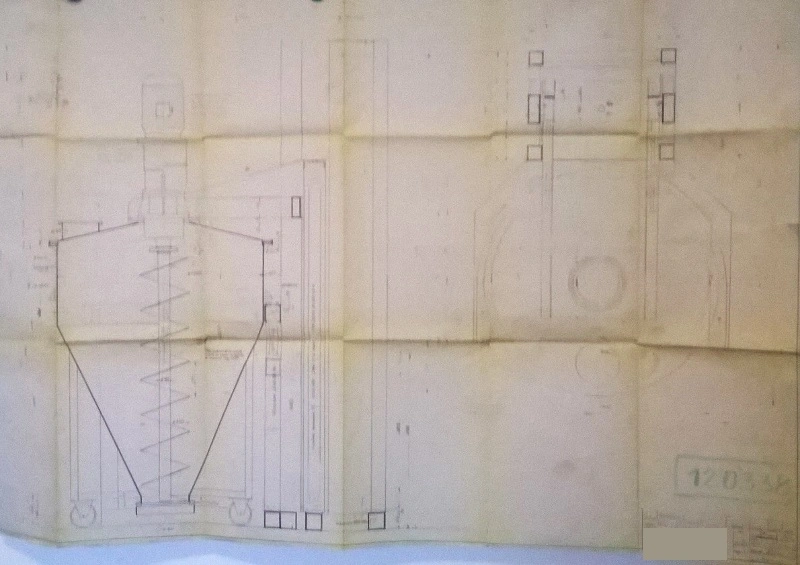
Diagram of mixing system built in 1979

You were 23 years old then and now you have almost 40 years of experience behind you... what have been the changes in this field?

“Over all these years, safety features have been revised: the machines have been enclosed with panels and a door with a safety limit switch. Meanwhile, at the electronic level, they are now controlled by a PLC that manages all mixing phases, with the ability to modify all parameters such as auger speed, auger immersion time, and discharge.”

So, were you able to design a system that met these requirements?

“They are used to mix virgin granules with colorants or additives and are utilized by companies that need to deliver the mixed product to the hoppers of extruders or injection molding presses. Or also for those who need to introduce small percentages of powders or wetting oils, in addition to granules and masterbatches, thanks to a special scraper (available upon request). They are built with a tubular iron structure and can be equipped with contact materials in AISI 304 or 316 depending on requirements. The cones are mounted on wheels with a diameter necessary to ensure smooth movement to move the cone with the material back and forth effortlessly.”