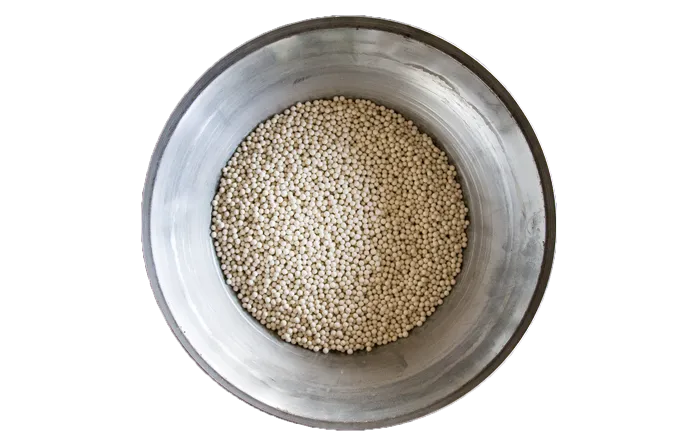
Molecular Sieves for Dehumidifiers
We replace used and inefficient molecular sieves
Molecular sieves are materials that can separate molecules based on size. This capability is based on the presence of tiny pores of exact and uniform size within the material, with a diameter ranging from 3 to 10 Å depending on the material.
Molecular sieves have a very high surface area within the pores (600–700 m²/g). Molecules larger than the pores cannot enter the material. Molecules small enough to penetrate through the pores can enter the material; typically polar molecules are adsorbed on the internal surface of the pores and remain trapped, while nonpolar molecules are not retained.
The most commonly used materials as molecular sieves are aluminosilicates and particularly zeolites, both natural and synthetic (permutites). Other materials such as aluminophosphates or polymeric cyanocomplexes have a porous structure in principle suitable as molecular sieves, but have not yet been used in technical applications